
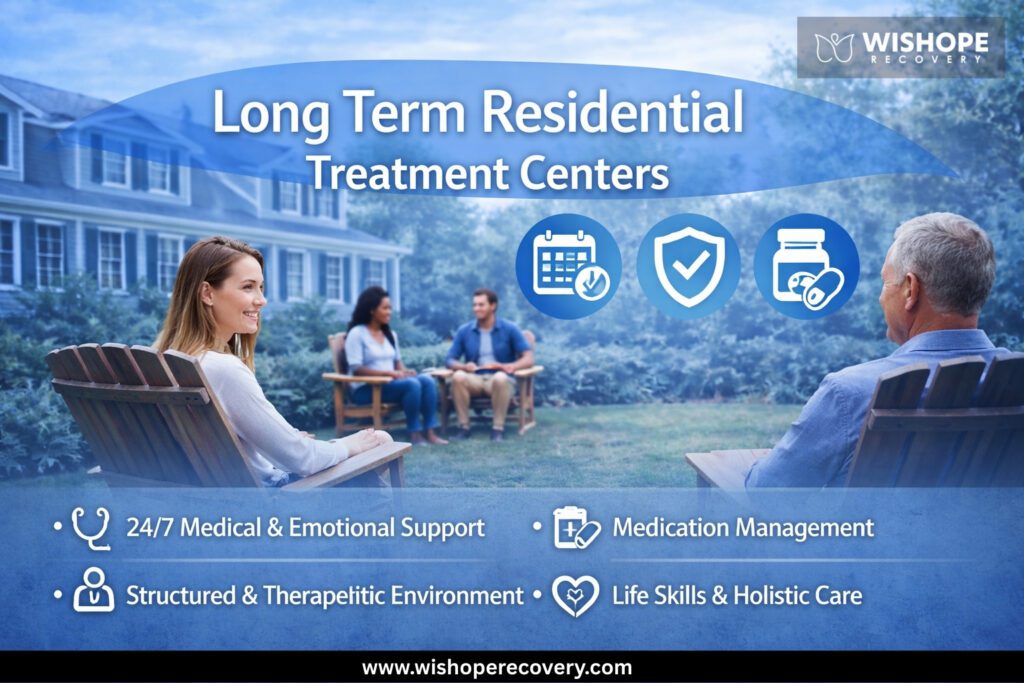
Addiction is a disease, not a flaw in a person’s character, and it requires a long-term treatment solution to overcome it effectively. For many people, a detox program or an outpatient treatment program is just not enough to overcome an addiction problem. This is where long-term residential treatment centers come into play, as they provide a holistic solution to overcome an addiction problem effectively. Whether it is an addiction to alcohol, opioids, or mental health disorders, long-term residential treatment centers can help overcome an addiction problem effectively.
If you or a loved one is ready to take that next step towards a life of recovery, then look no further than Wishope Recovery’s personalized treatment solutions to overcome an addiction problem effectively.
Key Takeaways
- Long-term residential treatment centers provide intensive care for 60-180+ days, resulting in better treatment outcomes for patients.
- Extended inpatient addiction treatment helps patients overcome underlying traumas, mental health issues, and behavioral problems, which short-term treatment centers might ignore.
- Dual Diagnosis is a type of treatment that is crucial for patients with mental health and substance use problems.
- Cognitive Behavioral Therapy (CBT) is one of the most effective therapies used in residential treatment centers for patients with addiction problems.
- Peer recovery support services are also crucial for maintaining a state of sobriety.
What Are Long Term Residential Treatment Centers?
Long-term residential treatment centers are live-in care facilities that offer individuals intensive addiction treatment for a long period of time, ranging from 60 days to 12 months or more. Unlike short-term treatment centers, individuals are given a daily schedule that includes therapy and skill-building.
Individuals in such centers are given 24/7 supervision, which minimizes relapse triggers significantly.
Who Needs Extended Inpatient Addiction Treatment?
While not everyone may need an extended stay in rehab, some people can greatly benefit from an extended inpatient addiction treatment. You may be a good candidate for an extended inpatient program if:
- You have experienced relapses after previous short-term rehab stays.
- You have a Dual Diagnosis – a mental health disorder and an addiction disorder, such as depression/anxiety/PTSD/bipolar disorder.
- You have a long history of substance abuse, especially with opioids, alcohol, or stimulants.
- Your home environment is unclean or unstable and may trigger relapses.
- You do not have a good support system in recovery.
What Happens Inside a Residential Treatment Program?
Residential Treatment centers have a set daily schedule, which includes a mix of therapy, wellness activities, and life skills training. Some of these activities may include:
- Individual therapy sessions
- Conducting group therapy sessions led by licensed therapists
- Conducting Cognitive Behavioral Therapy workshops to change negative thought processes
- Conducting mindfulness sessions to manage stress
- Nutrition and fitness activities
- Family therapy sessions
- Conducting relapse prevention sessions
Cognitive Behavioral Therapy is among the most common therapies used in Residential Treatment centers.
How Does Dual Diagnosis Treatment Work in Residential Settings?
Dual Diagnosis Treatment is a form of treatment that tackles substance use disorders, as well as co-occurring mental health issues, all at once. This is essential, especially because mental illness is one of the main causes of relapse.
In a residential setting, Dual Diagnosis Treatment can take many forms, such as:
- Psychiatric Evaluations
- Trauma-Informed Care
- Cognitive Behavioral Therapy (CBT) for substance use disorders and mental health issues
- Individualized Treatment Plans that change over time
What is the Role of Peer Recovery Support Services?
Peer recovery support services can be considered the invisible glue that holds together successful, long-term recoveries. These services provide individuals in recovery with access to trained peers who have their own experience of living with addiction and recovering from it.
Peer recovery support services, both inside residential centers and out, provide:
- Emotional support from someone who really gets it
- Accountability relationships
- Access to community resources
- Reduced stigmatization through shared experience
According to the National Institute of Health, peer support services have been shown to increase client engagement with treatment and reduce the risk of relapse following discharge.
What Should You Look for in a Long-Term Treatment Center?
One of the most important decisions that you will have to make is selecting a long-term treatment center that suits your requirements. Here’s what you should look for:
- Accreditation: Is it accredited by a well-known organization such as The Joint Commission?
- Individualized care: Does it provide individualized care to each patient?
- Dual Diagnosis: Does it provide dual diagnosis treatment?
- Therapy types: Are various types of therapy, such as CBT, trauma therapy, and family therapy, provided?
- Aftercare planning: Does it provide aftercare planning by providing connections to peer recovery support services?
- Staff credentials: Are the staff members licensed and have experience in long-term inpatient addiction treatment?
How Long Should a Person Be in Residential Treatment?
The length of stay in the center will depend on the level of addiction and the individual’s level of mental health problems. Research has shown that:
- A 30-day program may be effective for detoxification
- A 60- to 90-day program may be effective for skills development leading to behavioral change
- A 6- to 12-month program may be effective for a deeper level of recovery
Conclusion
Recovery is a process that requires time, patience, and support, and this is exactly what long-term residential treatment centers give people. It is here that people get a chance to escape the chaos of life and recover, and lead a healthy, productive, and meaningful life.
At residential treatment centers, individuals get access to evidence-based treatment modalities such as Cognitive Behavioral Therapy, Dual Diagnosis Treatment, and Recovery Support Services, providing their recovery with the foundation it needs.
Wishope Recovery is here to walk alongside you in every step of your journey towards recovery. At Wishope Recovery, individuals get a chance to not just survive, but thrive.
FAQs:
Is Dual Diagnosis Treatment available in the majority of residential treatment centers?
Many accredited treatment centers offer Dual Diagnosis Treatment, so be sure to check.
What is the main difference between Residential Treatment and Outpatient Treatment?
Residential Treatment centers require patients to live in the facility, while Outpatient Treatment centers do not.
Does WisHope Recovery offer Long-term Treatment?
WisHope Recovery offers individualized, evidence-based treatment programs that are effective for extended recovery.
Are there support groups available after I complete a Treatment Center?
Yes, there are support groups available after you complete your program, as the majority of the United States is now covered through the SAMHSA program.