
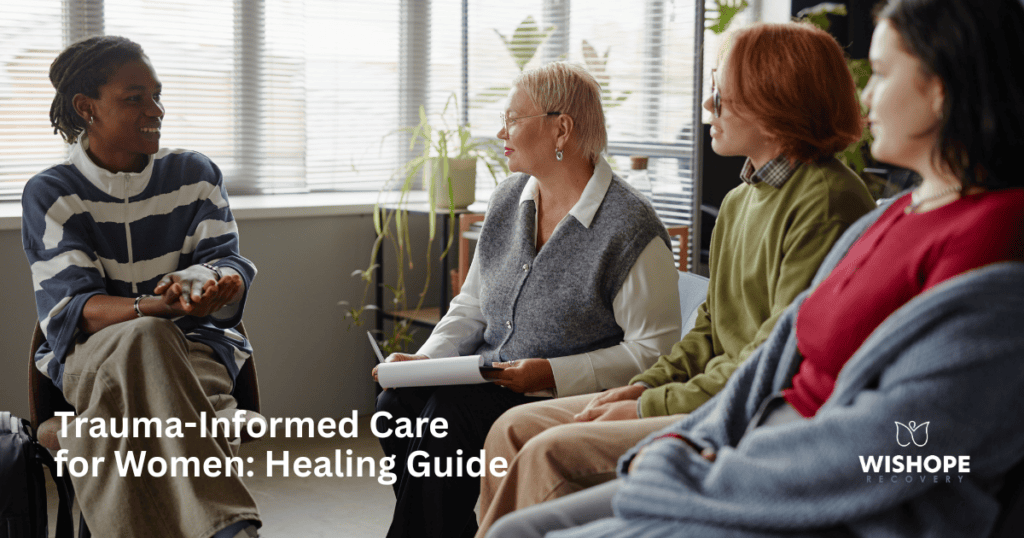
Healing is not a straight line, and it is especially so for women, with layers that are deeply personal, cultural, and emotional. Whether your trauma is related to childhood abuse, domestic violence, sexual assault, or loss, the journey of healing is one that truly sees and honors you. Trauma-informed care for women is a specialized approach that truly recognizes their unique experiences and builds a foundation of safe, empowering support for their healing journey.
Here at WisHope Recovery, we believe every woman deserves a safe, supportive environment that guides her on her unique healing journey. If you or a loved one is on this journey of trauma, we are here with you.
Key Takeaways
- Trauma-informed care for women emphasizes safety, trust, and empowerment rather than the treatment of symptoms.
- Trauma therapy for women includes the treatment of gender-specific trauma, such as domestic violence, sexual trauma, and reproductive trauma.
- Gender-specific trauma treatments help women heal from trauma more effectively, as they respect the way women experience trauma.
- One-on-One Counseling allows women to heal in a personal space that helps to overcome the depth of emotional pain.
- Group Therapy helps women overcome isolation and build community, which is an important aspect of healing for women in recovery.
What Is Trauma-Informed Care and Why Does It Matter for Women?
Trauma-Informed Care is an approach that acknowledges the prevalence of trauma and incorporates this understanding into all levels of support. It is an approach that asks, “What happened to you?” rather than “What is wrong with you?”
Trauma-Informed Care for women is an approach that has life-changing implications. According to research from the National Center for PTSD, women experience more trauma than men, including sexual assault, intimate partner violence, and child abuse. Furthermore, women are twice as likely as men to experience PTSD. Trauma-Informed Care for women considers these facts.
How Does Gender-Specific Trauma Treatment Differ from General Treatment?
Gender-specific trauma treatment is not the same as general trauma treatment because it has been tailored to address the social, biological, and emotional realities of women.
The differences are as follows:
- Safe space: Women-only environments reduce anxiety and shame, allowing for easier sharing.
- Culturally aware care: Practitioners are aware of the gender roles, culture, and inequality that play a role in trauma.
- Whole-person care: Gender-specific trauma treatment is holistic, focusing on physical, emotional, relational, and identity health.
- Trauma-Informed Care is integrated into every aspect of gender-specific trauma treatment.
What Types of Therapy Are Most Effective for Women Who Are Healing from Trauma?
Can One-on-One Counseling Make a Difference?
Yes, it can, in a powerful way. One-on-One Counseling offers women a safe, non-judgmental space in which they can work through their trauma. A skilled therapist will employ techniques such as Cognitive Behavioral Therapy, EMDR (Eye Movement Desensitization and Reprocessing), and other modalities to assist women in processing their trauma and finding safety.
One-on-One Counseling is particularly effective for:
- Survivors of sexual trauma or abuse
- Women struggling with complex PTSD
- Women who are uncomfortable in group settings initially
- Women struggling with grief, loss, or identity issues
How Does Group Therapy Support Women’s Healing?
Group Therapy is one of the most powerful tools in trauma therapy for women. Healing is often done in community, and there is something powerful that happens when women sit in a circle with other women who truly get them.
Group Therapy helps women:
- Break through shame and isolation
- Build trust and healthy relationship skills
- Gain perspective from shared experiences
- Find a sense of belonging and empowerment
What Role Does Trauma-Informed Care Play in Everyday Recovery?
Trauma-Informed Care does not simply refer to therapy sessions. It also refers to how care providers communicate, listen, and establish boundaries and trust.
In other words, it refers to how women are always kept informed of their treatment plans and how their voices are involved. It also refers to how women have choices rather than being given mandates. In addition, it refers to how women’s strengths are emphasized and how their safety is ensured.
Trauma therapy for women that incorporates these values creates an environment where healing is possible.
What Should Women Look for in a Trauma Recovery Program?
Choosing the right program matters deeply. Here’s what to prioritize:
- A program grounded in Trauma-Informed Care principles
- Availability of both One-on-One Counseling and Group Therapy
- Gender-specific or women-focused treatment tracks
- Licensed clinicians experienced in trauma therapy for women
- A culture of respect, compassion, and survivor-centered care
Don’t be afraid to ask programs directly: Do you use a trauma-informed approach? Do you offer gender-specific trauma treatment? Your healing deserves that standard.
Heal Without Hesitation
Healing is possible – and you don’t have to find your way alone. Trauma-informed care for women is the integration of science, compassion, and lived experience to provide effective paths to healing.
At WisHope Recovery, women don’t just find healing – they find a community that believes in them, believes in them enough to honor their story and walk with them every step of the way. If you’re just starting on the journey to find help or are looking for more support, WisHope Recovery offers trauma-informed care programs specifically designed with you in mind. Reach out today and begin your journey towards the life you deserve.
FAQs:
How is trauma therapy for women different from general therapy?
It is an approach that specifically addresses women’s experiences with sexual trauma, domestic violence, reproductive trauma, and other issues that are unique to women’s experiences.
Is Group Therapy effective for trauma survivors?
Yes. Group Therapy is an effective treatment for trauma survivors. It breaks isolation, creates community, and helps reduce symptoms of PTSD.
What happens in One-on-One Counseling for trauma?
One-on-One Counseling is a private session with a licensed therapist that allows a woman to work on her trauma and her recovery at her own pace.
How do I know if WisHope Recovery is right for me?
If you are a woman in need of compassionate and trauma-informed care, WisHope Recovery has a gender-specific treatment program that is designed specifically with women like you in mind.