
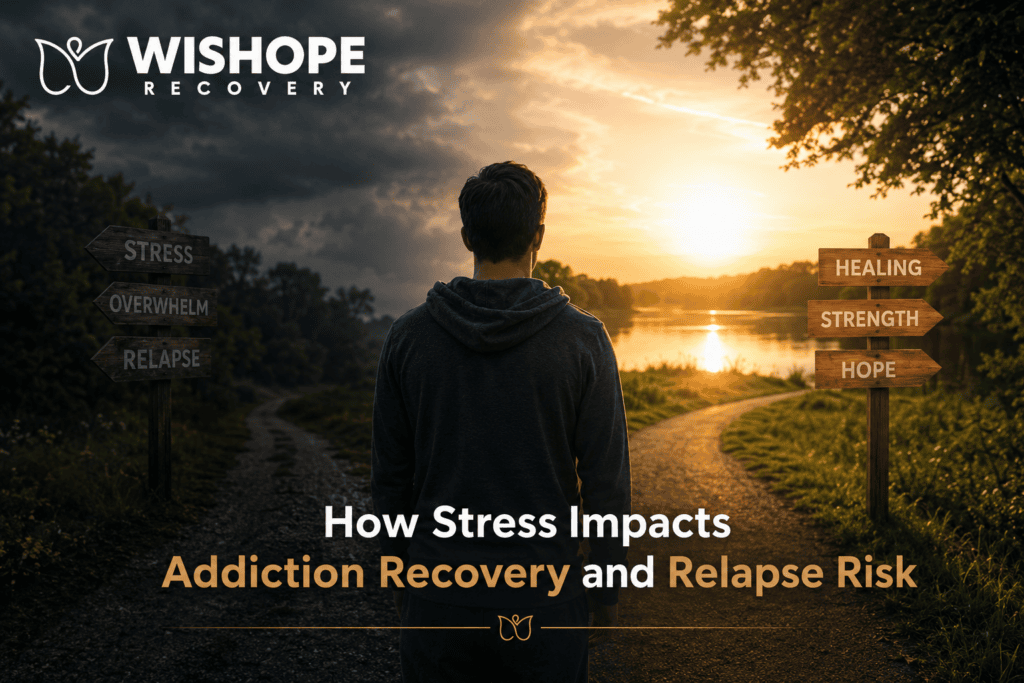
Recovery is seldom straightforward, with stress often being one of the primary causes. It can stem from various aspects such as professional life, interpersonal relationships, financial struggles, or simply the pressure to be sober. The effects that stress has on an individual, their mind, and their body have an ability to secretly sabotage the recovery process. Grasping how the stress addiction recovery process connects with stress is probably the most important step that one can take towards permanent sobriety.
At WisHope Recovery, one of the best addiction and mental health facilities in Milwaukee, Wisconsin, patients receive scientifically proven and holistic treatment designed to help them cope with stress and prevent any setbacks.
Key Takeaways
- Chemical changes to the brain caused by chronic stress affect one’s impulses.
- The connection between stress and relapse is strong, particularly during the first year of recovery.
- The common causes of addiction relapse triggers are stress and a lack of control over one’s emotions and surroundings.
- Some of the ways to prevent relapse include therapy, being mindful, and engaging in structured activities.
- Treatment and aftercare can assist in developing resilience through professional help.
Why Does Stress Raise the Possibility of Relapse?
The body goes into fight-or-flight mode when stress kicks in, resulting in the release of hormones like cortisol and adrenaline. This process, for a recovering individual, would mirror the same processes that happen when one uses drugs or alcohol, making one crave past behaviors as an escape route. It is no wonder then that stress and relapse commonly coexist in medical literature and studies.
Long-term stress weakens an individual’s emotion regulation and decision-making skills. The prefrontal cortex, which deals with decision-making and impulse control, tends to become less active in times of stress, while reward centers tend to become more active. This is how highly motivated individuals can be at risk during stress periods.
What Are Some of the Most Common Addiction Relapse Triggers?
Understanding your triggers is one of the most useful things you can do during recovery. Some of the most common addiction relapse triggers can be categorized as emotional, environmental, or situational.
- Stress within relationships or family
- Financial stress or job stress
- Lack of social contact or feeling lonely
- Exposure to individuals or places related to past drug usage
- Insomnia, exhaustion, or untreated mental health symptoms
These triggers are all capable of adding extra stress on top of everyday stress and thus making cravings seem even more severe. The ability to identify your own patterns, with the assistance of a counselor, helps you plan a strategy to cope with the situation before it happens.
How Can Emotional Stress Impact Recovery?
Recovery from emotional stress does not merely mean the avoidance of unpleasant emotions. Instead, it means the ability to deal with them properly. People who are starting their path to treatment have likely used drugs for many years as a way to avoid emotions such as sadness, guilt, or anxiety.
This can be a burden on their recovery since such unresolved issues can manifest themselves with much force when one stops using substances. With the help of organized therapy, a person has a chance to heal and develop new emotional coping skills.
What Are Effective Relapse Prevention Strategies?
Handling stress during recovery is not just about having the willpower but about using concrete and habitual measures that fit into one’s routine. The best relapse prevention methods involve both professional treatment and day-to-day activities that people can do for themselves.
- Maintaining mindfulness or practicing meditation in order to remain grounded.
- Setting up regular schedules for sleeping, exercising, and proper nutrition.
- Regular sessions with the therapist, either individually or in groups.
- Receiving help from the sponsor, support group, or a family member.
- Having a plan on how to cope with stress put down in writing.
What matters in this particular case is consistency rather than intensity. Small but consistent steps taken regularly are more likely to succeed than big ones that occur sporadically, particularly during stressful times.
What Role Does Stress Management Play in Recovery to Avoid Relapse?
Stress management is something that requires constant work instead of being a quick fix. Those individuals who have the ability to recognize the signs of stress early on, such as irritability, fatigue, and anxiety, have a good chance to handle the situation before their emotions escalate into craving.
Some of the most effective treatment approaches would be cognitive behavioral therapy, which will allow a person to learn their triggers and how to handle them, and mindfulness therapy to help deal with stressful situations immediately.
Need for Professional Assistance During Stressed Times
Recovery is not a lone journey, and professional help could mean the difference between a short period of failure and a complete relapse. Outpatient treatment programs give people the opportunity to go through treatment and be held accountable while being able to perform their daily duties, which could include working or dealing with family life.
After the program, continued assistance can be of great use to individuals in helping them keep on track. This way, they are connected with counselors, support groups, and peer recovery services to help them deal with stress throughout the day.
Gaining True Stability with Holistic Approaches
Sobriety cannot simply be about abstaining from substances but about achieving resilience against all the pressures of life. Stress addiction recovery through treatment and healthy routines is a true basis for gaining long-lasting results. WisHope Recovery takes a holistic approach by addressing all aspects of the personality and helps its clients learn how to cope with any situation they may encounter.
If the stress makes recovery more difficult than it has to be, WisHope Recovery can offer professional help. As an accredited provider of evidence-based treatment services, we offer personalized assistance in Southeastern Wisconsin. Making a decision to get help is never a sign of weakness; this step can actually prevent relapses.
FAQs:
Can stress cause a relapse by itself?
The risk of relapse caused by stress occurs very rarely by itself, but if the person does not cope with stressors and triggers, then it significantly increases. The development of mechanisms to cope with stress in the first days of recovery can minimize the risk of this problem.
How fast does stress cause cravings?
Within minutes after experiencing stress, the patient may start to experience cravings, especially if the source of the stress is connected with some of the former triggers.
Does therapy really help in coping with stress?
Yes, therapy allows using the techniques that the person would not be able to develop alone in order to cope with the problems related to the stress.
What is the best thing to do if a relapse is sensed?
One of the most effective actions in this case is contacting a sponsor, a therapist, or attending a meeting. Having a relapse prevention plan in hand will make it easier.
Does WisHope Recovery provide any post-treatment assistance?
Yes, we provide an aftercare program and peer recovery services in order to continue supporting clients.