
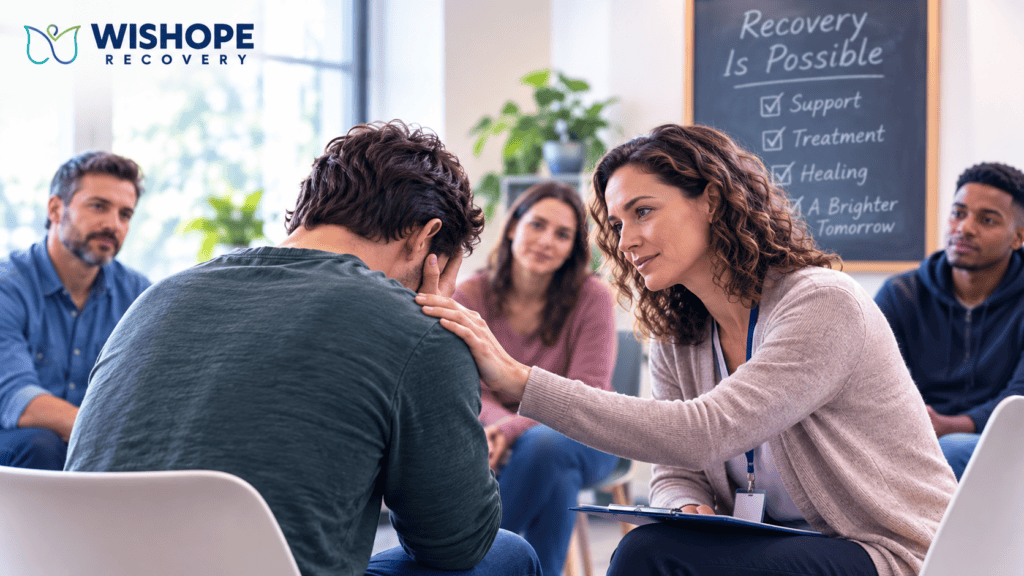
Addiction is arguably the most widely misunderstood disorder in the US right now. Even with the years of research behind us, some misconceptions remain that govern public opinion about seeking help for their problem. These addiction treatment myths keep individuals and families from seeking help at the right time.
We at WisHope Recovery know very well what effects misinformation can have on patients’ health. Our specialists use compassionate treatment, combined with SAMHSA-approved, scientifically proven approaches to combat myths in the field.
Key Takeaways
- Addiction is a disease that can be treated and is not something due to failure on the part of the individual.
- Rock bottom is not necessary for the individual to get treatment, as early treatment proves more effective.
- There is no one program for all, as treatment needs to be personalized.
- Detoxification is just the first step, while recovery needs continued treatment and therapy.
- Involvement of family and licensed care can help recovery.
Why Are There Still Such Misconceptions about Rehab?
One common misconception about rehab in pop culture involves depicting the treatment program in ways that are extremely exaggerated. The stereotypes persist because they are based on the unrealistic and distorted perceptions of treatment programs that people form in movies or TV shows.
The other reason why there are many rehab myths and misconceptions is that rumors spread much faster than any scientific evidence can. In most cases, some out-of-date or simply false information spreads from one person to another.
Myth: It’s Necessary to Reach the Point of “Rock Bottom” Before Treatment Starts Working
The notion of waiting until a critical moment arises before seeking any assistance is one of the most dangerous concepts in the area of addiction treatment effectiveness. Various studies confirm that treatment is more effective in cases when the person receives help early enough before the situation turns into something irrevocable and serious.
It is one of the most harmful addiction treatment myths existing nowadays. There is no need for one to lose one’s job, house, or family before getting professional help.
Myth: All Addiction Treatment Programs Are the Same
It is often believed that every rehabilitation program provides similar services, but the reality is far from it. Effective addiction treatment programs are always customized based on the client’s substance abuse history and psychological state, as well as their personal situation.
There is a huge variety of programs which differ in duration and nature:
- 24-hour residential programs for treating substance abuse issues of medium to high severity.
- Outpatient or extended care programs for clients returning to everyday life.
- Specialized programs for those who have psychological disorders in combination with substance abuse.
- Different types of therapies, including cognitive-behavioral and mindfulness therapy.
Going to an accredited treatment facility, such as one accredited by The Joint Commission, is the best way to ensure quality and personalized treatment for every client.
Is Willpower All That Counts for Effectiveness?
An old fallacy tends to confuse willpower with medical issues when talking about addictions. Real addiction recovery facts prove that substance use disorder affects brain chemistry and that it cannot be cured using only willpower. Medical help works with this problem right away.
The mixture of therapy, a structured approach, and medical help achieves much better results compared to willpower alone. That is why there is no need to apply willpower-based techniques in evidence-based addiction treatment and why professionals prefer proven techniques such as CBT and MI.
Myth: Medical Detox is Recovery
Detoxification is considered the entire recovery process, but it’s not true since medical detox addresses the physical withdrawal only. The medical detox program helps to manage withdrawal symptoms safely in order to prepare for further therapies.
Recovery requires prolonged treatment, the creation of strategies to prevent relapse, and the rebuilding of life after detox is over. Not taking that next step will cause relapse since psychological and behavioral problems will remain untreated.
Is Treatment in Rehabs Related to Addictions and Not Mental Problems?
One of the most popular myths is that the treatment in rehabs is only aimed at addictions without paying attention to mental disorders. But it’s not the case, and the rehabilitation process includes a holistic approach like dual diagnosis treatment, which means that besides addictions, anxiety, depression, and trauma can also be treated.
The treatment of two issues brings more predictable results than the treatment of one issue at a time. The professional therapists analyze the client’s condition from day one of his admission.
Why Is It Important to Have Family Inclusion During Treatment for Recovery?
Recovery is not done in isolation, but most people think of recovery as something done by an individual. Involving family therapy in the process can help fix broken trust, communication, and support structures caused by addiction.
This inclusion also helps the family realize addiction is a disease and not something the individual chose to do.
What Does The Reality Behind Recovery Look Like?
Often, relapse is viewed as an indication that the treatment was a complete failure. Here is what the facts say:
- The relapse rate of addictions is comparable to the rate of relapses in other diseases, such as diabetes or high blood pressure.
- Relapse means that the approach to treatment needs adjustment rather than failure.
- Long-term recovery usually requires ongoing treatment rather than reaching some final point.
This perspective on relapse helps eliminate unnecessary guilt and makes people go back to their treatment instead of quitting completely.
How Can One Tell the Legitimacy of a Rehab Program?
With many rehabilitation facilities boasting their services on the Internet, distinguishing those that offer effective treatment can become tricky. A credible rehab program should disclose all its licenses and accreditations, as well as the credentials of its clinicians, and should never try to force anyone to sign up right away. All centers accredited by organizations such as The Joint Commission follow high standards concerning patient safety, ethics, and quality of care.
The most important thing about an evidence-based addiction treatment is a personalized assessment of patients instead of applying a single set of questions to everybody. A credible program will always explain its treatment approaches, ratio of staff to clients, and methods of monitoring their progress.
Some preliminary steps can save a person from wasting their time and money:
- Check whether the facility has necessary licenses and accreditations.
- Inquire what kinds of treatment and qualifications the clinicians have.
- See if the program has testimonials and statistics proven rather than vague statements.
- Find out if the program covers mental health issues along with substance abuse.
Why Choose Evidence Rather than Myths for Addiction Treatments?
The addiction treatment myth is a major stumbling block to seeking help, which can actually transform your life. Having the right facts helps individuals and their loved ones make the right decisions regarding treatment.
WisHope Recovery is an accredited provider of evidence-based programs in Southeastern Wisconsin. We have residential treatment, dual diagnosis, and family-inclusive therapies, among others.
Contact us at wishoperecovery.com or by phone to begin your confidential assessment now!
FAQs:
Is addiction treatment only for emergencies?
Absolutely not; addiction treatment will help everybody, irrespective of how serious their addiction is.
Is it enough to undergo detoxification to recover from addiction?
No, because detox only takes care of the physical withdrawal symptoms; other methods must be considered for recovery.
Is there a chance for family involvement in the treatment process?
Yes, because when the family is involved in the treatment process, better communication is encouraged, and trust will be rebuilt.
Does relapse mean that the treatment did not work?
No, relapse is expected even with chronic illnesses, and it shows the need to change the method of treatment used.
Do all rehabilitation facilities offer the same treatment?
No, effective treatment facilities tailor the services according to the client’s specific needs. Treatment may include both residential and outpatient facilities, among others.