
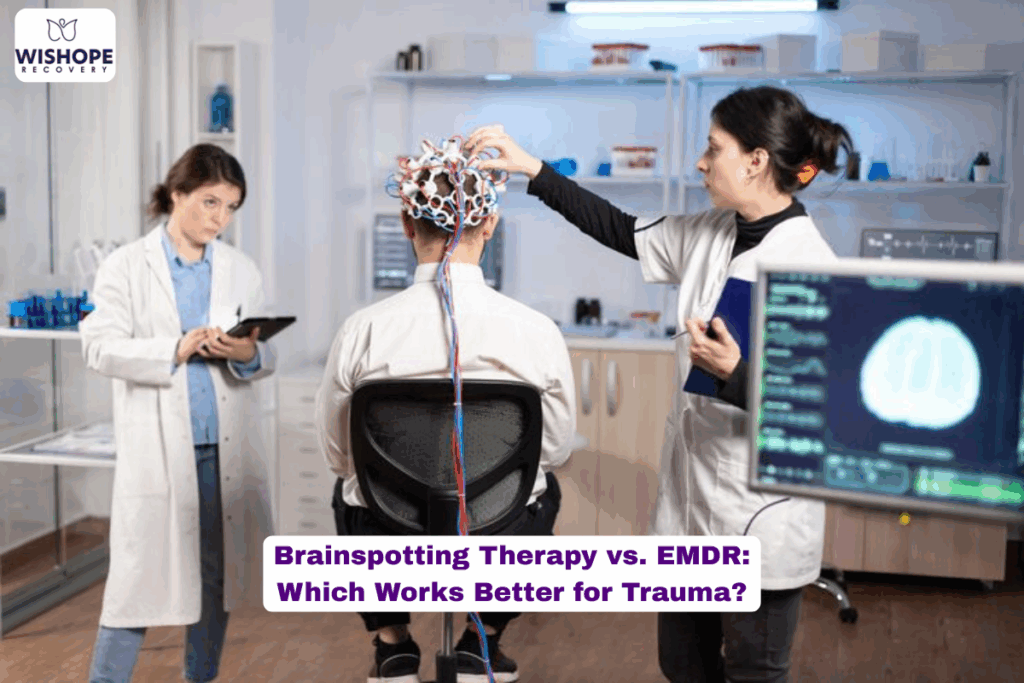
Millions globally grapple with trauma as a mental health condition. Among the many therapeutic approaches used to facilitate healing, Brainspotting therapy and Eye Movement Desensitization and Reprocessing (EMDR) have gained significant attention. Both therapies target trauma resolution, but their approach and experiences differ. This article distills how these trauma therapies differ, how effective each approach can be when included, and in which specific situations it shines, while highlighting the contributions of group therapy, recreation therapy, and individual psychotherapy to trauma recovery.

Understanding Brainspotting Therapy
Even more recently, brainspotting was developed in 2003 as another therapeutic modality. It utilizes designated eye positions known as brain spots to target trauma held deep within the brain and body. Brainspotting is different from traditional talk therapy because it focuses on the brain-body connection: trauma tends to get stuck in the body as physical sensations and in subcortical areas of the brain involved in emotion and memory. In sessions, clients are directed to specific places in the brain to access while tuning into their bodies, allowing them to release and process emotions more challenging than in traditional talk therapy (without having to slowly bring every trauma to life). Brainspotting therapy is a very client-driven therapy that can be modified to meet the needs of your body, and pace sessions may flow from one form of therapy to the other.
The EMDR Approach to Trauma
EMDR (Eye Movement Desensitization and Reprocessing) is an evidence-based therapy that has been around long enough to have shown that it works, especially to address post-traumatic (PTSD) and post-traumatic symptoms. The therapist leads the client through a prescribed eight-phase protocol in which the client recalls traumatic memories while making bilateral eye movements or otherwise stimulating the left & right sides of the body, such as through tapping or audio tones. It is thought to assist in reprocessing traumatic memories so that they can be more effectively integrated. EMDR is half talk therapy and half external stimuli, inviting clients to talk some while also engaging at a medium level with external stimuli, and it provides a set protocol that works well for acute traumas and anxiety disorders.

Comparing Brainspotting Therapy and EMDR
Although both therapies utilize eye movements to access trauma, the methods and session dynamics diverge significantly:
| Aspect | Brainspotting | EMDR |
| Eye Movement | Fixed gaze on “brain spot” | Rapid bilateral left-right movements |
| Session Style | Open, client-guided, flexible | Structured, therapist-led protocol |
| Engagement Level | Minimal talk; internal processing | Moderate talk; guided recall |
| Session Duration | 30–90 minutes, variable | Typically 8–12 sessions, protocol-driven |
| Trauma Focus | Complex, somatic trauma & emotional blocks | PTSD, anxiety, specific events |
| Physical Body Focus | Strong emphasis on body sensations | Cognitive and physical integration |
For certain clients, brainspotting therapy can provide a quicker way to create space for processing trauma embedded in the body more directly. EMDR has more structured phases and tends to attract those who enjoy having a more stepwise path that is very clear throughout therapy.
Effectiveness for Trauma Recovery
Clinical evidence supports both Brainspotting and EMDR as effective trauma treatments. Many mental health organizations recommend EMDR as one of the most scientifically validated treatments for PTSD. Brainspotting is a much newer and less researched therapy, but it appears to yield excellent results, especially for clients who have challenges with talk therapy or who have more complex, longer-term trauma histories. Other studies indicate Brainspotting takes fewer sessions to relieve symptoms, so it can be an efficient approach for some.
Role of Group Therapy, Recreation Therapy, and Individual Psychotherapy
A trauma-responsive therapeutic environment is often multimodal:
Group therapy provides peer support, reduces feelings of isolation, and helps individuals heal together within a community. Trauma-focused group treatments derived from evidence-based approaches, such as Cognitive Processing Therapy (CPT), focus on coping skills and the dissemination of shared recovery stories. If you simply type in a search bar, group therapy near me, locally? Now that we have a few first steps out of the way.

Recreation Therapy — This method uses engaging in recreational activities as an aspect of promoting physical, emotional, and social health. They are writing that recreation therapy enhances trauma activities by providing tools to relieve pressure and build trust through arts, sports, and mindfulness, allowing movement within a therapeutic context where talk therapy can reinforce the ideals.

One-on-one psychotherapy: Individual psychotherapy has an important role in healing trauma. Based on what the client shares and their previous relationships to each, the therapists then customize the interventions, EMDR, Brainspotting, or trauma-focused CBT. Individual sessions give space to work on deeper trauma and more complex emotional work.
Choosing Between Brainspotting and EMDR
Choosing which therapy is more appropriate really comes down to the individual client, the nature of the trauma, and the desired goal of therapy. People who prefer an evidence-based and structured approach to healing from specific traumatic events often find EMDR a great fit.For trauma clients who have not been able to access the nervous system through traditional means or who have unaccessed somatic symptoms, the relaxed and body-centered approach of Brainspotting fits this form of work. Regardless of the primary modality used to address the trauma for PTSD, making use of supportive therapies such as group sessions or recreation therapy can be beneficial in promoting overall recovery .
Conclusion
Both Brainspotting therapy and EMDR are highly effective tools for trauma work, offering different strengths based on the needs of the client. When combined with other supportive modalities (group therapy, recreation therapy, etc.) and individual psychotherapy, this holistic trauma recovery approach is allowed to grow and flourish. And for those looking for some quality trauma support with some heart, these doors can be a pathway to the deeper levels of healing.
WisHope Recovery specializes in professional trauma therapy and Brainspotting with all the personal touch and bonus you want while experiencing EMDR and/or trauma therapy, group therapy near me, and individual psychotherapy tailored for you.