
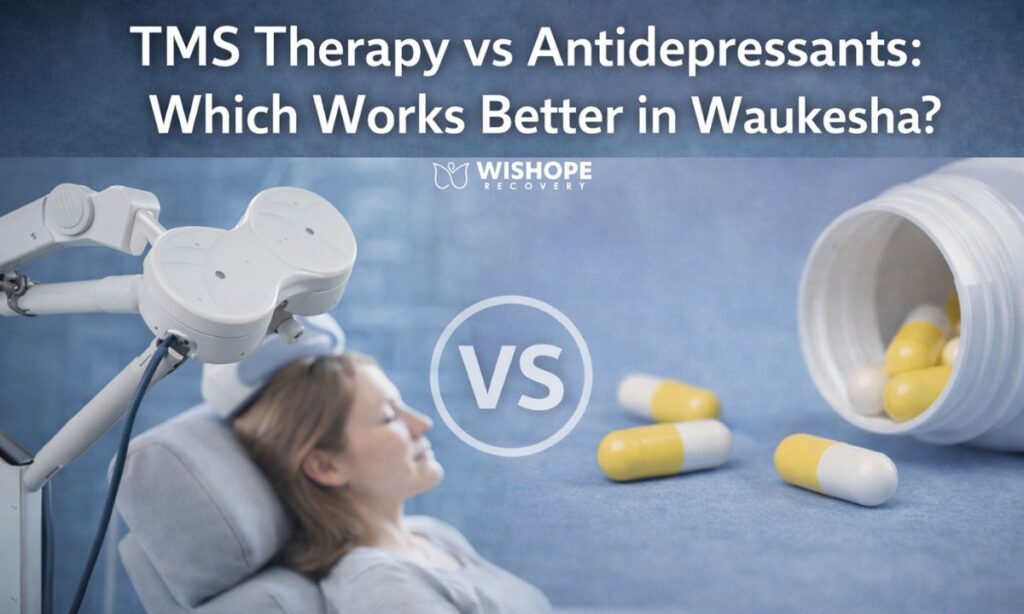
When choosing depression treatment, many people want clear answers—not guesses.
If you are comparing TMS therapy vs medication Waukesha, the evidence shows that both options can help, but they work best for different situations. Antidepressants are often a first step, while TMS is commonly used when symptoms do not improve with medication.
This comparison explains how each treatment works, the pros and cons, and how providers help patients choose the most effective option.
Key Takeaways:
- Antidepressants are often the first treatment option,but do not work for everyone.
- TMS therapy provides a non-medication option for individuals with persistent symptoms.
- TMS targets brain activity directly without systemic side effects.
- Medication may cause ongoing side effects, while TMS side effects are usually mild and temporary.
- Choosing the right treatment depends on symptom history, response to past care, and clinical evaluation.
- Personalized treatment at WisHope Recovery supports better long-term outcomes.
Why Is Depression Treatment Not the Same for Everyone?
Depression affects the brain differently from person to person.
What works well for one individual may offer little relief for another.
Several factors influence treatment response, including:
- Brain chemistry and neural activity
- Severity and duration of symptoms
- Stress, trauma, and lifestyle factors
- Past response to treatment
This is why many people explore both medication and non-medication options.
How Do Antidepressants Treat Depression?
Antidepressants work by adjusting how neurotransmitters function in the brain.
They aim to stabilize mood and reduce symptoms over time.
These medications are often prescribed because they:
- Are widely available
- Have long clinical histories
- Help many people with mild to moderate symptoms.
However, medication does not always provide full relief.
What Are the Common Challenges With Antidepressants?
While helpful for some, antidepressants can present difficulties.
Common concerns include:
- Delayed symptom improvement
- Ongoing side effects
- Reduced emotional range
- Symptoms returning after stopping medication
This has led to increased interest in comparing antidepressants vs TMS for long-term relief.
What Is TMS Therapy and How Does It Work?
Transcranial Magnetic Stimulation (TMS) is a non-invasive treatment that targets specific brain regions involved in mood regulation.
It works by:
- Sending focused magnetic pulses to underactive areas of the brain
- Encouraging healthier neural activity
- Avoiding whole-body chemical effects
Patients remain awake, alert, and can return to daily activities immediately after sessions.
Who Is TMS Therapy Most Helpful For?
TMS is often recommended for individuals whose depression does not respond to medication.
This includes people experiencing treatment resistant depression, where symptoms persist despite trying multiple antidepressants.
TMS may be considered when:
- Medications have not worked
- Side effects are difficult to tolerate
- A non-drug approach is preferred.
What Does Research Say About TMS Effectiveness?
Clinical studies consistently show that TMS can significantly reduce depressive symptoms, especially in individuals who have not responded to medication.
Evidence around TMS for treatment resistant depression shows:
- Higher response rates than additional medication trials
- Improved mood stability
- Longer-lasting symptom relief
This makes TMS a valuable option when progress has stalled.
How Do Side Effects Compare Between Treatments?
| Aspect | Antidepressants | TMS Therapy |
| Overall impact | Side effects often influence treatment decisions | Side effects are generally easier to manage |
| Common physical effects | Fatigue or restlessness | Temporary scalp discomfort |
| Digestive response | Digestive issues may occur | No digestive impact reported |
| Sleep patterns | Sleep disruption is possible | Sleep patterns usually remain unchanged |
| Emotional effects | Emotional blunting in some individuals | Emotional clarity is typically preserved |
| Post-treatment effects | Effects may continue daily | Mild headaches after treatment |
| Body-wide impact | Systemic side effects possible | No systemic side effects |
| Patient consideration | Important for daily comfort | Significant for people seeking alternatives to antidepressants |
How Long Does Each Treatment Take to Show Results?
Time to improvement varies.
Antidepressants:
- Often requires 4–8 weeks for noticeable changes
- May need dose adjustments
- Sometimes requires long-term use.
TMS therapy:
- Usually delivered over several weeks
- Many patients notice improvement by week three or four..
- Can provide sustained benefits
How Doctors Decide Between TMS Therapy and Medication?
Choosing the right treatment is a clinical decision based on evidence, not trial and error.
Providers often evaluate:
- Number of medications previously tried
- Severity and persistence of symptoms
- Side effects from past treatments
- Daily functioning and quality of life
For individuals who have not improved after multiple medication trials, TMS may be recommended as part of a structured treatment resistant depression therapy plan.
At WisHope Recovery, treatment decisions are personalized, monitored closely, and adjusted based on patient progress.
How Does Local Care Improve Treatment Outcomes?
Consistent access to care improves results.
Quality depression care Waukesha includes:
- Ongoing symptom monitoring
- Adjustments based on response
- Supportive mental health professionals
Local care helps ensure continuity and long-term success.
What Should You Expect During Treatment?
Regardless of the option chosen, effective care involves collaboration.
Patients can expect:
- Clear explanations of treatment plans
- Regular progress check-ins
- Adjustments when needed
- Support focused on real-life improvement.
WisHope Recovery emphasizes patient education and shared decision-making throughout the process.
Can I stay on medication while receiving TMS at WisHope Recovery?
In many cases, yes. Treatment plans are coordinated based on clinical recommendations.
How do I know if my depression is treatment resistant?
If multiple medications have not improved symptoms, an evaluation at WisHope Recovery can help determine the next steps.
Does insurance cover TMS therapy?
Many insurance plans cover TMS when the criteria are met. WisHope Recovery assists with coverage verification.
How long do TMS results typically last?
Many patients experience long-term improvement, especially with ongoing follow-up care.