
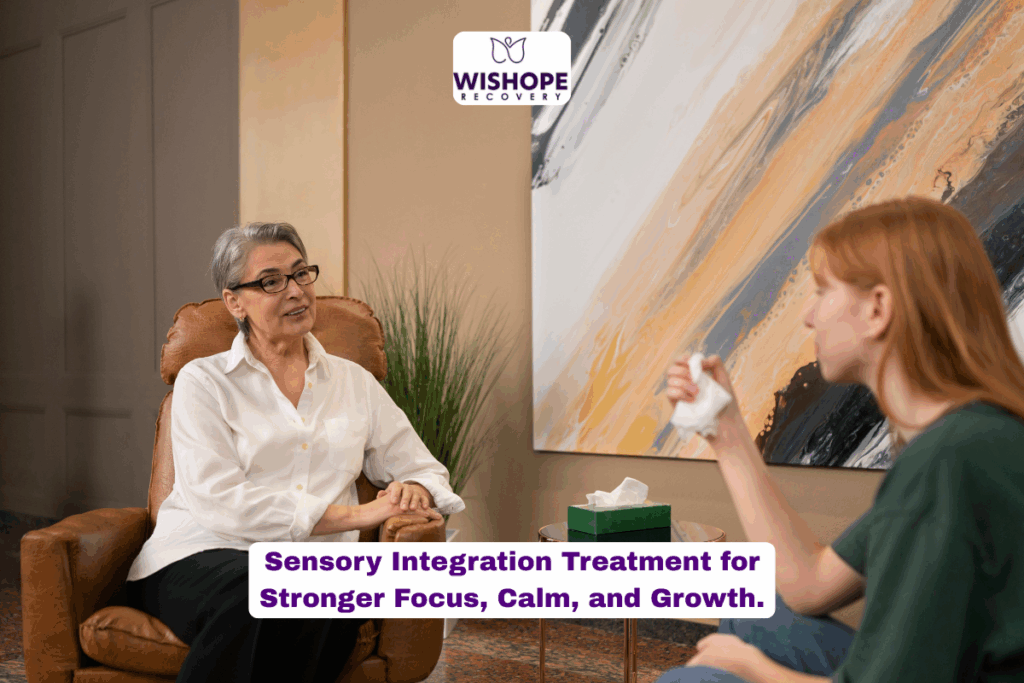
Given the modern-day stress, trauma, and addiction, the quickest way to find healing is the type of therapy we need. It is important to note that traditional therapy has always been the foundation of mental health and addiction treatment, but sensory integration treatment is a more revolutionary, holistic therapy aimed at helping the mind and body reconnect.
But which one works better? Are you going to remain with the old school talk therapy and counseling stuff, or are you going to try the sensory methods using your body and the built-in healing stuff you were born with?
Explore the science, methods, and benefits of both, and their role in today’s recovery programs, including: residential addiction treatment, family therapy for addiction, and recreation therapy.

What Is Sensory Integration Treatment?
Sensory integration treatment is a form of therapy that aims to assist those who have trouble processing and responding to sensory information. It addresses the processing of sensory input from the tactile, audio, visual, olfactory, and proprioceptive systems as they relate to emotional regulation, behavior, and daily living.
Sensory integration therapy was initially developed for children with sensory processing disorders, but it is now a common treatment used in addiction recovery, trauma rehabilitation, and mental health treatment for adults.
With sensory integration, therapists implement physical activities that stimulate the senses, such as balance exercises, rhythmic movement, music, or tactile stimulation, to help rewire the brain responses. As a result, clients get better grounded in themselves and more present and calm emotionally.
How Does Traditional Therapy Work for Healing the Mind and Body?
Traditional therapy is a process based on a number of established processes for helping the mind and body heal.
When people say “traditional therapy,” they often mean a talk-based approach like cognitive-behavioral therapy (CBT), psychotherapy, or counseling. These methods where it is more structured sessions that are done between a client and therapist with the purpose of discussing thoughts, feelings, and/or behaviors.
It aims to improve awareness of and change thoughts, identify triggers, and provide strategies for dealing with depression, anxiety, or addiction.
Conventional therapy is useful for the cognitive (mind) aspect of healing, but often misses the physiological (body) factors of trauma or addictive behavior, such as tightness in the body, overstimulated senses, or neuroplasticity.
Why Is Sensory Integration Important in Addiction Recovery?
Addiction affects sensory processing and, therefore, dysregulates the sensory system of the person. Decades spent doing drugs can change the way our brains process pleasure, pain, and stress. And thus start lusting, emotional imbalance, and trigger management issues.

Sensory integration therapy re-educates the nervous system to respond appropriately to sensory input. Someone who reaches for drugs or alcohol to dull suffering can learn alternatives to self-soothing through movement, through feeling, through mindfulness.
Sensory therapies are often incorporated into more holistic experiences when a person is in residential addiction treatment, complementing more traditional care practices. Yoga, art, aromatherapy, or recreation therapy are all sensory-based practices that encourage emotional awareness and self-regulation.
Benefits of incorporating sensory integration in addiction treatment are:
Calming the nervous system
Reducing anxiety and emotional volatility
Enhancing body awareness and control
Sensory Mindfulness: Creating Long-Term Sobriety
However, there is a key difference between the two approaches: they both aim to heal; however, they do heal differently. In practice, the best results might be achieved through a mixed approach, as is often the case in addiction recovery programs that incorporate the two body-based and cognitive therapies.
What Are the Key Differences Between Sensory Integration and Traditional Therapy?
| Aspect | Sensory Integration Treatment | Traditional Therapy |
| Approach | Body-centered (focuses on how the body and senses affect emotions) | Mind-centered (focuses on thoughts, beliefs, and behavior patterns) |
| Techniques | Movement, tactile stimulation, balance exercises, sound, and light-based therapy | Talk therapy, CBT, DBT, motivational interviewing, psychotherapy |
| Goal | Regulate the nervous system and promote mind-body harmony | Understand and modify thought patterns and emotional responses |
| Focus Area | Physical and emotional integration | Cognitive and behavioral change |
| Ideal For | Those with trauma, anxiety, sensory overload, or addiction | Those with depression, anxiety, relationship issues, or behavioral problems |
How Does Sensory Integration Benefit the Body and Mind Together?
The beauty of sensory integration treatment is that it works both in the body and mind. It is aware that both trauma and addiction are held not just in our thoughts but also in our nervous system.

Here’s how it helps:
Nervous System Regulation – Deep pressure touch or rhythmic movement stimulates the parasympathetic (rest-and-digest) system, decreasing anxiety and enhancing emotional regulation.
Boosts Emotional Awareness – Exploring sensory experiences heightens interoception (the ability to feel what is going on inside your body). Sensing what is going on physically leads to better recognition and regulation of emotions.
Promotes Awareness — Sensory practices are done in the present moment, which means they help with impulsivity, a big problem when overcoming addiction.
Supports Physical Wellbeing — Therapy that encourages movement can help promote coordination, balance, and confidence in the body, contributing to overall physical health and wellbeing.
How Does Recreation Therapy Complement Both Approaches?
Recreation therapy helps to bridge the gap between sensory and more traditional therapies. Structured recreational activities, sports, arts, nature trail exploration, and team challenges enabling physical, cognitive, and emotional recovery.

In addiction recovery, recreation therapy:
Promotes positive social interactions
Increases motivation and engagement in therapy
Gives natural sensory input (auditory, vestibular, tangible)
Strengthens Life Skills and Coping Mechanisms
Through the combination of sensory integration treatment with traditional counseling, along with recreation therapy, the result is a holistic and well-rounded recovery experience that encompasses all aspects of healing.
Which Therapy Works Better for Long-Term Healing?
It really depends on personal needs.
However, for those rooted in trauma or who have trouble articulating emotions, sensory integration treatment may work better.
Traditional therapy is probably best for someone who benefits from introspection, self-reflection, and a structured approach to problem-solving.
In most cases, especially with residential addiction treatment, a hybrid of both is necessary to create long-term recovery.
Combining an integrative model for releasing trauma in the body, and developing a cognitive toolbox to help them remain in a resilient mental state.
Key Takeaways
This approach uses the body and how it responds to communication to facilitate emotional regulation and healing.
Therapeutic gentleness. Traditional therapy involves conversation and reflection to change thinking and behavior patterns.
Both approaches are useful; however, the best recovery programs are those that combine them.
Recreational Therapy — stuff that gets you moving, thinking, channeling your emotions into less dangerous activities, sometimes it is just to smash that pillow or go for a walk, and Control over means control over yourself.
Integrated treatment approaches are comprehensive approaches suited for residential addiction treatment and family therapy for addiction.
Also read:- 5 Long-Term Benefits of Sensory Integration Disorder Therapy for Kids
FAQs
What is included in sensory integration therapy?
It is about including movement, tactile, auditory, and other sensations, oriented towards helping people to learn how to manage their feelings and autonomic nervous system responses. These could be yoga or balance exercises, or creative play.
What Is Sensory Integration And How Does It Aid Addiction Recovery?
By rewiring the brain reward system, enhancing emotional control, and lessening the triggers that can lead to relapse (such as environmental and associates), mindfulness is helping people get sobriety & recovery back on track.
Can I do sensory integration and talk therapy?
Yes. Many treatment centers utilize both to allow the patient to fully heal both emotionally and physically. This mix causes increased mindfulness, resilience, and deep healing.
What is the purpose of recreation therapy for addiction?
Recreational therapy offers a pleasurable, interactive, enjoyable approach to help you enhance your coping mechanisms, reduce stress, and develop healthy behaviours. It complements sensory and more traditional therapy approaches as well.
Conclusion
The mind and body are complicated entities that involve a synergy between emotional awareness and sensory equilibrium. Talk therapy guides you to understand why you think and feel the way that you do, while sensory integration treatment helps you experience and live the healing process through the body.
At WisHope Recovery, we know that real healing only takes place when the heart and mind work in conjunction. We use sensory integration, family therapy for addiction, and recreation therapy in our residential addiction treatment programs to provide healing for individuals and families for true, lasting recovery.
If you or your loved one is prepared to undertake a journey of internal healing, WisHope Recovery offers a seamless blend of holistic wellness and compassionate care.