
Key Takeaways
- Inpatient means you’re living at the treatment center full-time, with medical staff around 24/7
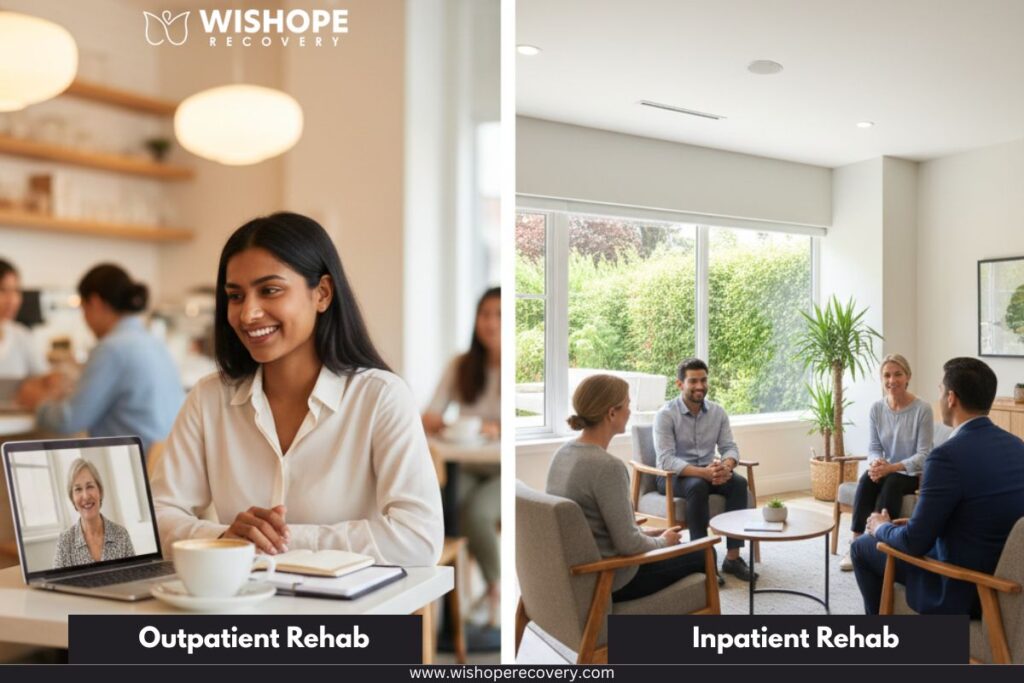
- Outpatient alcohol rehabilitation means you stay in your own home and just show up for treatment sessions at scheduled times during the week
- How serious your addiction usually determines which type makes sense
- A lot of people do outpatient substance abuse treatment after they finish inpatient, just to keep things on track
- Both types use therapy methods that work and have research backing them up
- Your home situation, work schedule, and what’s going on with your family all matter when you’re making this call
Choosing a treatment program for addiction? It’s not straightforward. There’s inpatient, where you basically live at the facility. Then there’s outpatient, where you go home every day. Each one does something different, and honestly, what helps one person might not do much for someone else. Getting a handle on what separates them helps you figure out which direction makes sense for what you’re dealing with.
What Inpatient Rehab Looks Like
Inpatient rehab is pretty much what you’d expect—you move into the treatment center for however long the program runs. Most of them go anywhere from 30 days to three months, sometimes longer. You’re there full-time, following whatever daily schedule they’ve got set up. That means therapy, group sessions, activities—all its built around supporting recovery.
This route makes the most sense for people dealing with heavy substance use. This is particularly true if previous attempts at sobriety haven’t been successful. When someone’s struggling with both addiction and mental health issues like depression or anxiety, it makes a huge difference to address them together. Being completely away from your normal environment? That removes the temptations and whatever triggers make staying clean harder in the first place.
Withdrawal can get medically messy. Sometimes it’s dangerous. Having doctors and nurses right there means if any physical symptoms pop up, they get handled immediately. Beyond just the medical side, there’s one-on-one counseling, group therapy where you’re connecting with other people going through similar stuff, and often things like yoga or art therapy thrown in. The whole idea is learning different ways to cope while getting to the bottom of whatever drove the addiction to begin with.
Why Consider Outpatient Treatment?
Outpatient substance abuse treatment gives you recovery options that fit into your regular life. You show up for appointments—could be a couple times a week or every day depending on what you need—then you head back to your normal routine. Treatment happens on whatever schedule works around your other stuff.
This fits people whose addiction problems aren’t as severe and who’ve got a reasonably stable home situation. Maybe you can’t take months off work, or you’ve got kids depending on you being around.
There’s a range within outpatient care. Partial hospitalization means you’re there most of the day, but you don’t sleep over. Intensive outpatient has you coming in multiple times each week for a few hours at a time. Regular outpatient might just be once or twice weekly. Your treatment plan can shift as you’re making progress—more sessions when you need the extra support, fewer when things start stabilizing.
How Do These Programs Actually Differ?
Both use solid therapy approaches that have research behind them. The difference is really in how treatment gets delivered day-to-day. At an inpatient facility, your entire day revolves around recovery stuff. Therapy sessions, group discussions, wellness activities, they’re woven all throughout your day. Staff are watching how you’re doing constantly and can step in if something seems off.
If you look up local outpatient substance abuse treatment near me, you’ll see they offer similar therapeutic approaches, just structured around appointments you attend a few times a week rather than full-day commitment. Here’s what’s kind of interesting though outpatient means you’re practicing your new skills in real situations right away. You’re dealing with actual stress, actual triggers, actual life stuff while you’ve still got your therapist to talk through it with. That real-world practice can build some strong coping abilities.
Mental health issues and addiction show up together a lot. Good treatment deals with both at the same time because ignoring one usually means neither one gets better. The main difference between inpatient and outpatient really comes down to how much structure wraps around you all day long.
What Should Shape This Decision?
How bad is the addiction? That’s question number one when you’re choosing between inpatient and alcohol counseling services. Years of heavy use, mixing different substances, or relapsing after you’ve already done treatment before that usually means you need the intensive support inpatient gives you.
Your home life matters a lot here. If you’re living somewhere where people are still using, or the relationships are toxic, trying to recover as an outpatient gets tough. But a stable home with people who’ve got your back? That makes outpatient substance abuse treatment near me way more likely to work out. You can heal while you’re keeping up with your daily life and what you’re responsible for.
Can Treatment Levels Change Over Time?
Recovery doesn’t follow a straight line, which is why long term recovery programs often combine multiple levels of care. Lots of people start inpatient to get stable, then move to outpatient for ongoing help. This graduated approach is starting intensive then dialing back, lets you ease into regular life while keeping that therapeutic support going.
Long term recovery programs often mix both levels. Maybe you do a month residential, then three months of intensive outpatient, gradually cutting back to weekly sessions as you get your footing. The schedule adjusts based on how you’re doing, not some preset timeline.
Sometimes it works backwards. You start outpatient and realize you’re struggling more than expected. Stepping up to inpatient isn’t admitting defeat, it’s recognizing what you need and being honest about it. Plenty of people who are years into solid recovery had to try different approaches before finding what clicked.
Partial hospitalization splits the difference. You get intensive daily treatment but go home at night. It bridges that gap between living at a facility and traditional outpatient appointments.
Why Do Support Systems Matter So Much?
Having people in your corner changes everything, regardless of which treatment type you choose. Family involvement, supportive friends, and connections with others in recovery significantly boost success in both inpatient and outpatient alcohol recovery programs. At WisHope Recovery, building strong support systems is a core focus of care.
Inpatient treatment creates built-in peer support, with individuals living alongside others working toward similar goals. These connections often continue after treatment through alumni events and ongoing group sessions.
Long-term recovery programs also emphasize creating support networks that last beyond formal care. Twelve-step groups, recovery mentors, and trusted contacts provide ongoing encouragement. Outpatient treatment typically helps individuals connect with these resources from day one, rather than waiting until residential care ends.
Job stability plays an important role as well. Employment offers structure, purpose, and financial stability—all of which support sobriety. Some programs provide assistance with resume building, job searches, and interview preparation, offering practical support for rebuilding life in recovery.
Frequently Asked Questions
Can I work while in outpatient rehab?
Absolutely keeping your job is one of the main advantages of outpatient alcohol rehabilitation. Programs schedule around work hours, with lots of evening and weekend options. Even the more intensive programs that need daytime attendance often work with part-time schedules or flexible arrangements.
Is outpatient treatment as effective as inpatient care?
It depends on fit more than inherent superiority. Matching treatment intensity to what you need matters most. For people with appropriate circumstances and solid support, outpatient substance abuse treatment near me produces excellent results. Research consistently shows that motivated outpatient participants with good home support achieve similar long-term success compared to inpatient patients.
What happens if outpatient treatment isn't working?
Good programs adapt when something's not working. When outpatient alcohol rehabilitation doesn't provide adequate support, transitioning to more intensive treatment demonstrates your commitment to getting better. Plenty of individuals who are now living sober lives experimented with several different methods before discovering what worked for them. Maintaining regular communication with your treatment team makes it easier to identify when changes become necessary.
Does insurance cover outpatient rehab?
Most insurance plans include both inpatient and outpatient options as essential health benefits. The specific coverage differs depending on your provider and individual plan details, so reviewing your benefits beforehand is a smart move. Treatment facilities typically handle insurance verification at no charge and provide clear explanations of your financial responsibility—including copays, deductibles, and any additional expenses.
Can outpatient treatment address co-occurring disorders?
Definitely. Quality outpatient substance abuse treatment includes comprehensive care for mental health conditions like depression, anxiety, PTSD, or bipolar disorder. Good dual diagnosis treatment tackles addiction and mental health together since they're usually interconnected. Treating one without the other rarely works long-term.
Making the Right Choice for Your Journey
There’s no universal best answer—only what fits your circumstances, needs, and goals. Both inpatient and outpatient paths can lead to lasting recovery when chosen thoughtfully. Factors like addiction severity, home support, daily responsibilities, and health needs matter. At WisHope Recovery, the focus is helping you take that first, meaningful step toward healing.