
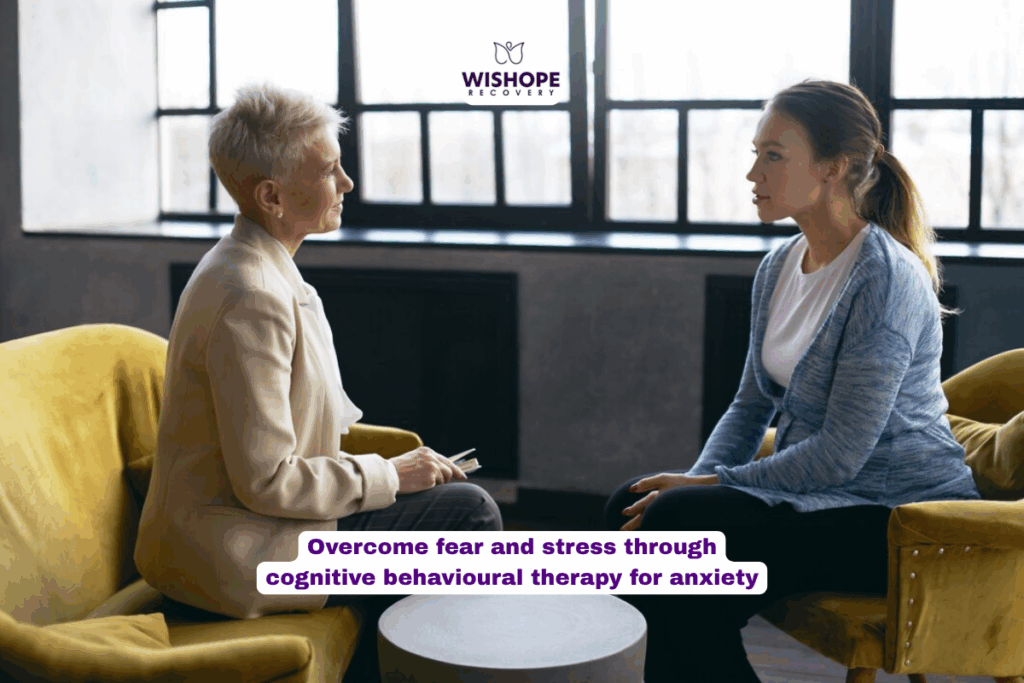
Have you ever thought about why so many people today are depressed and anxious? The World Health Organisation says that about 4.4% of the world’s population has an anxiety disorder, and 5% of adults are depressed. These conditions continue to rise as modern stress, uncertainty, and social pressures take a toll on mental health. More and more people need therapies based on evidence to work, so they are more critical than ever.
Wishope Recovery gives you the correct information and advice to help you find out about mental health treatments that work. This blog will show you how Cognitive Behavioural Therapy (CBT) can help with anxiety and depression. Cognitive behavioural therapy for anxiety is one of the most researched and recommended ways to improve mental health. People want solutions that work and change negative thoughts and behaviours, so its importance has grown. Wishope Recovery will show you how CBT works, what its benefits are, and why it is still one of the best options for mental health.

Understanding How CBT Works in Managing Anxiety and Depression
Cognitive Behavioural Therapy (CBT) looks at how thoughts, feelings, and actions affect each other. It helps you figure out what unhealthy thoughts are making you anxious and sad and replace them with healthier ones. A lot of treatment programs use both CBT and motivational interviewing therapy to help people stick with their plans and make changes that last. They all help you become more aware, control yourself, and bounce back.
The steps in CBT are:
- Find negative thoughts that make you feel anxious or sad.
- Use guided questioning to question irrational beliefs.
- Put harmful thoughts out of your mind and replace them with balanced, realistic ones.
- Use new ways to deal with problems in real life.
Key Techniques Used in Cognitive Behavioural Therapy
CBT therapy for anxiety teaches you how to find the thoughts that make you anxious and scared and then change them. You learn how to control your feelings through practical ways that really help with your symptoms.

Here’s what your therapist uses:
- Cognitive restructuring catches your distorted thoughts and replaces them with accurate ones.
- Exposure therapy lets you face feared situations in a safe, controlled way until anxiety drops.
- Behavioral activation gets you moving again, doing activities that boost your mood.
- Mindfulness training keeps you in the present moment instead of being trapped in worry cycles.
- Problem-solving skills give you tools to handle challenges head-on when they arise.
The Role of Cognitive Therapy for Anxiety in Changing Negative Thought Patterns
Cognitive therapy teaches you how your thoughts can change how you feel and what you do. If you take a moment to think about your fears, you can calm down. Cognitive therapy helps you understand how your thoughts can change how you feel and what you do. This works even better in DBT group therapy settings near me or yours because you can learn from what other people have been through.

We are here for you. Diverse people at an alcoholic anonymous meeting listening to the experience with addiction of a new member of the group
Here’s what it does for you:
- You stop negative thoughts from going too far.
- You replace your harsh inner voice with realistic, balanced self-talk.
- You learn to stay calm when you’re stressed out.
- You learn to control your emotions and make better choices when things get tough.
- You learn better in groups because you can draw strength from shared experiences and motivate each other.
Benefits of CBT and How It Supports Long-Term Emotional Health
CBT can help you really control how you think and feel. Not only does it help with symptoms today, but it also teaches you skills that will last a lifetime. You learn how to handle stress on your own in the future, and you stay balanced and confident long after therapy ends.

Key benefits of CBT:
- Quickly lessens symptoms of anxiety and depression.
- It helps you focus better and solve problems better.
- Helps you understand yourself better and control your feelings better.
- Helps you build healthy habits and ways to deal with stress that last.
How it helps your emotional health in the long run:
- You learn how to deal with stress for the rest of your life.
- You stop relapsing by dealing with the thought patterns that are causing problems.
- You get stronger so that emotional triggers don’t throw you off course.
- You become independent and can take care of your recovery without help all the time.
Frequently Asked Questions (FAQs)
1. What is cognitive behavioural therapy for anxiety?
CBT for anxiety helps you see the negative thought patterns that make you scared and worried. It gives you valuable ways to deal with stress that change how you think, feel, and act.
2. How is DBT group therapy near me and you different from CBT?
DBT group therapy focuses on emotional regulation and mindfulness. CBT targets negative thinking and behaviour patterns. Both work well together to strengthen emotional control and coping skills.
3. Can motivational interviewing therapy be used with CBT?
Yes. Motivational interviewing helps you stay motivated to change by helping you set goals for yourself. It works with CBT to help you believe in yourself and do the right thing.
4. How does recreational therapy near me help people get better mentally?
Recreational therapy is a type of therapy that uses fun and creative activities to improve mood, social skills, and health. When you do it with CBT, it helps you deal with anxiety and depression by getting you involved and letting you talk about how you feel.
5. How long does it take for CBT to work?
Most people feel better after 6 to 12 sessions. Your timeline will depend on the situation, but three things will help you make real progress: being consistent, practising, and working closely with your therapist.
Final Words
CBT gives you a structured way to tackle anxiety. You swap negative thoughts for realistic ones and build coping tools that work long-term. Search for “recreational therapy near me” to find recovery options and connect with others facing the same struggles.
Wishope Recovery gives advice and support based on proven therapies like Cognitive Behavioural Therapy for anxiety and other therapies that go along with it. You get real mental health solutions that will make you feel better for a long time.